




Where filtration fits in olive oil production
Olive oil production relies on mechanical processes. After harvest, olives are milled and the oil is separated from the remaining skin, pulp and pits by pressing or centrifugation. Prompt transport and processing help limit unwanted fermentation before extraction.
Although extra virgin olive oil has a long shelf life, its composition can change during storage. Filtration can support production by addressing particles, water, waxes and lipids at relevant process stages. Explore the pathways below to find the challenge that best matches your process.
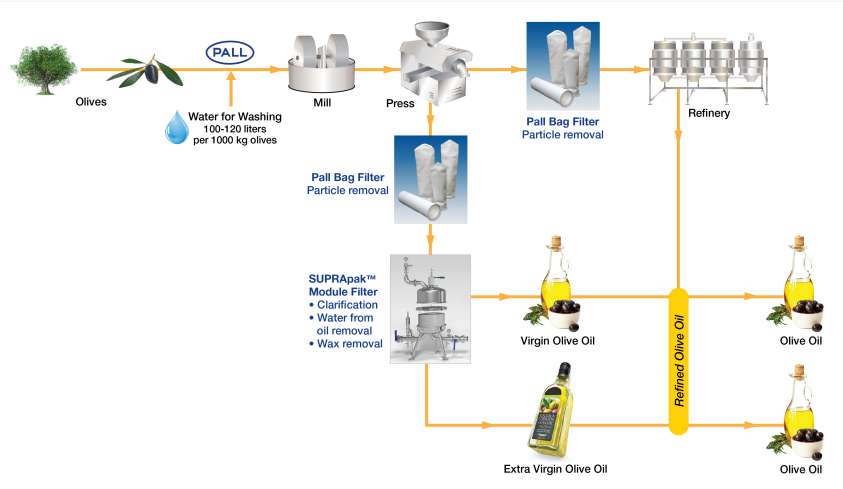
Olive oil filtration pathways
Explore the filtration challenge most relevant to your production process.


Olive oil market trends and production challenges
Explore the market and process context shaping olive oil production and filtration decisions.
Find the right filtration pathway
Filtration needs vary by process stage, oil characteristics and the result required. Review the relevant application pathway or connect with Pall to discuss your production needs by filling in the form below.
Discuss your olive oil filtration needs