



What Is Ethylene Production?
Ethylene production uses steam cracking to convert hydrocarbon feedstocks into ethylene and other petrochemical products.
Filtration and separation technologies help manage contaminants throughout the process, supporting equipment protection, product quality and downstream operations.
Ethylene Production at a Glance
| Feedstocks | Process | Challenges | Objectives |
|---|---|---|---|
| Ethane, propane, naphtha and gas oil | Steam cracking and separation | Liquids, solids and contaminants | Equipment protection and process reliability |
Filtration Solutions Across the Ethylene Production Process
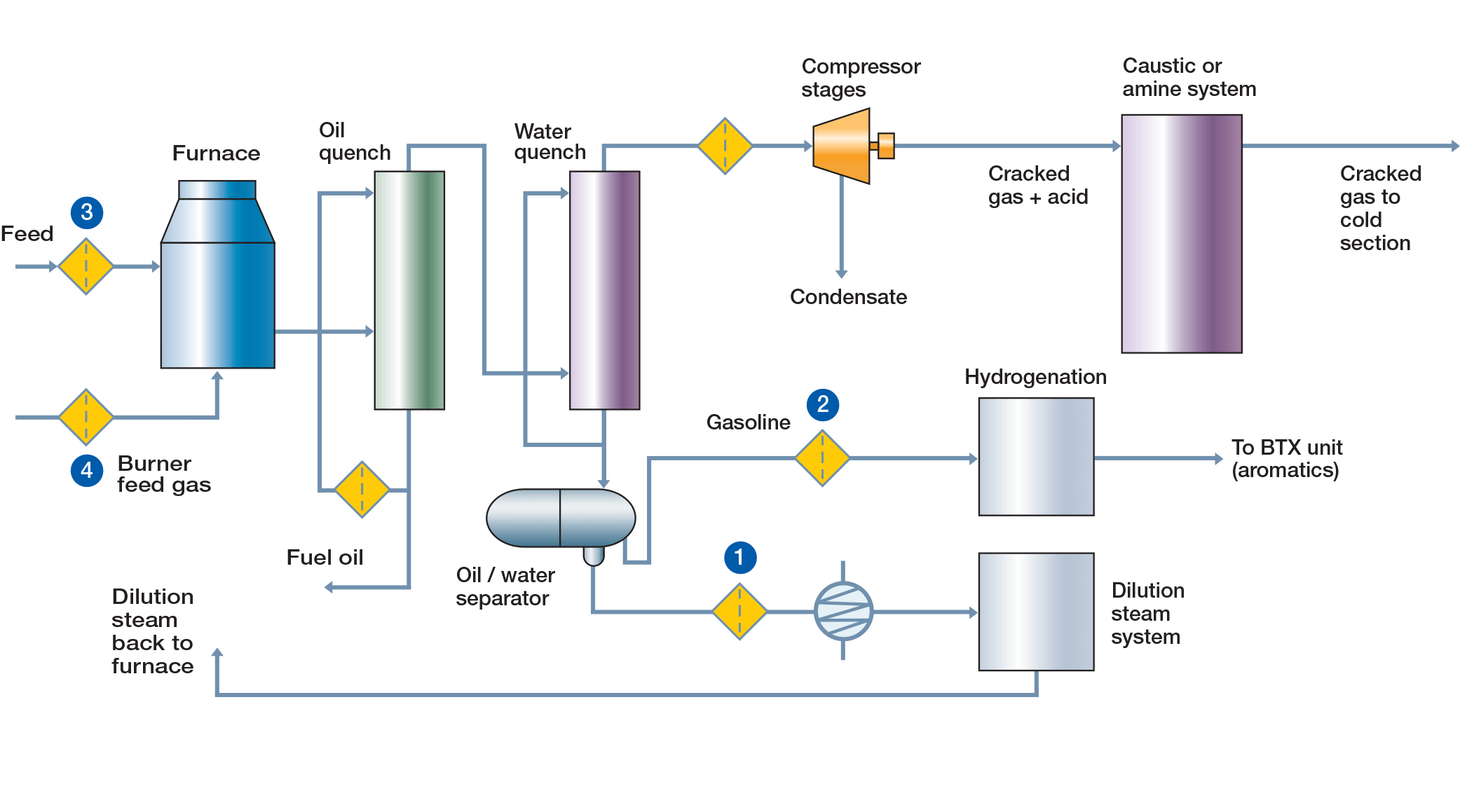
Recommended Filtration Solutions for Ethylene Production
The recommendations below correspond to the numbered locations in the process flow diagram.
| Process Point | Application | Recommended Products | Key Benefits |
|---|---|---|---|
| 1 | Removal of pygas from quench water | Profile® II, PCCS®, PhaseSep® | Reduces solids and liquids, helping extend equipment life |
| 2 | Removal of water from pygas | PCCS®, PhaseSep® | Helps protect downstream hydrogenation processes |
| 3 | Removal of solids from furnace feeds | Profile® II, Ultipleat® High Flow | Supports furnace reliability and reduces fouling |
| 4 | Protection of furnace burner tips | SepraSol Plus LG | Improves burner performance and reduces maintenance |
Ethylene Production Hot Section
During steam cracking, feedstocks such as ethane, propane and liquid hydrocarbons are heated at high temperatures to produce ethylene and related products. After cracking, the process stream is cooled, separated and purified through downstream operations.
How Coalescer Technology Supports Ethylene Production
Coalescer technologies can help support ethylene production operations by:
- Reducing free liquids in pygas streams
- Removing corrosion by-products where required
- Reducing particulate and hydrocarbon carryover
- Supporting longer process run times
Ethylene Production Challenges and Pall Solutions
| Challenge | Solution | Benefit |
|---|---|---|
| Manage Pygas Contaminants | Remove free liquids and solids from pygas streams using coalescing and filtration technologies | Longer equipment life and lower maintenance. |
| Protect Furnace Feed Streams | Reduce particulate and liquid contaminants in furnace feedstocks before they enter critical process equipment. | Improved reliability and reduced fouling. |
| Improve Burner Performance | Remove contaminants that contribute to burner tip deposits and reduced furnace efficiency. | Improved performance and lower maintenance. |
Ethylene Production Hot Process Facts
- Usage: As a basic building block in the manufacture of ethylene glycol, polyethylene, polypropylene, polystyrene, polyester resin, polyvinyl chloride, etc.
- Form of final product: Gas with low boiling point.
- Feedstocks: Ethane, propane, ethane/propane, naphtha, gas oil.
- How it’s made: By cracking of gas or liquid feeds in high temperature furnaces, followed by quenching the cracked gas and obtaining various products by fractionation.
For more information about High Flow Filtration Technology, please see below.
High Flow Filtration Technology
Longer process run times at lower risk of encountering upset process conditions
Discuss Your Ethylene Production Application
Talk to Pall's filtration specialists about filtration and separation technologies used within ethylene production and hot section processing operations.
Frequently Asked Questions
What is the hot section in ethylene production?
The hot section refers to process stages associated with steam cracking and initial product recovery operations.
Why is filtration important in ethylene production?
Filtration helps manage contaminants that may affect equipment performance, operational reliability and downstream processing requirements.
What contaminants are commonly found in ethylene production processes?
Ethylene production processes may contain particulate contamination, liquid carryover and process byproducts that require management at key process stages.
What filtration technologies are used in ethylene production?
Ethylene operations may use liquid/gas coalescers, process filtration systems and particulate removal technologies to manage contaminants.
Where is filtration used in ethylene production?
Filtration technologies may be applied throughout cracking, separation and downstream processing operations where contamination control is required.
Discuss Your Ethylene Production Application