



Adsorbent Dehydration for Natural Gas Processing
Protect molecular sieve dehydration systems from contamination that can impact dehydration performance and downstream operations.
What Is Adsorbent Dehydration?
Adsorbent dehydration is a natural gas processing method used to remove water vapor from natural gas streams. Molecular sieve dehydration systems are commonly used where low water content specifications, cryogenic processing requirements or downstream equipment protection are important.
Because molecular sieve dehydration units rely on adsorbent media to remove moisture, effective contamination control can help support dehydration performance and operational reliability.
Adsorbent Dehydration at a Glance
- Removes water vapor from natural gas streams
- Uses molecular sieve adsorbent media
- Supports low water content specifications
- Helps protect downstream processing equipment
- Requires effective particulate and liquid contamination control
How Molecular Sieve Dehydration Works
Molecular sieve dehydration helps dry natural gas by removing water from natural gas streams before downstream processing, transportation or storage.
The process typically includes gas-liquid separation, molecular sieve dehydration vessels and downstream filtration technologies designed to help protect equipment and maintain process performance.
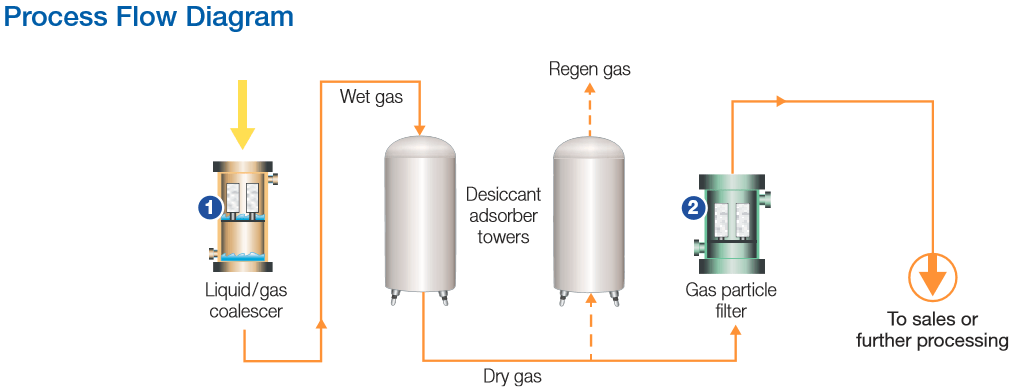
Why Contamination Control Matters in Molecular Sieve Dehydration
Molecular sieve dehydration systems can be affected by particulate contamination, liquid hydrocarbon carryover and adsorbent dust. Effective filtration technologies can help support dehydration performance and downstream processing requirements.
Natural Gas Dehydration Unit Requirements
Natural gas dehydration systems commonly require:
- Achievement of water quality gas specifications required by downstream operations
- Maximized molecular sieve dehydration efficiency and operational performance
- Protection of downstream natural gas processing equipment
- Reduction of particulate contamination that may affect processing operations
- Minimized pressure drop
Molecular Sieve Hydration Challenges and Filtration Solutions
| Challenge | Solution |
|---|---|
| Improve your adsorbent dehydration productivity and reliability with effective liquid and solid removal upstream of the desiccant beds to protect against bed degradation and capacity loss.
|
| Protect against introduction of traces or slugs of liquid by capturing the water upstream of the desiccant beds.
|
| Protect downstream equipment, such as compressors and catalyst beds through effective solids control downstream of the desiccant beds.
|
Explore Natural Gas Filtration Solutions
Contamination control technologies can help support molecular sieve dehydration performance and downstream gas processing operations.
Recommended Filtration Solutions for Molecular Sieve Dehydration
| Application | Pall Products | Customer Benefits |
|---|---|---|
Desiccant bed protection | Productivity, reliability, on-spec water content, and extended desiccant life via maintained dehydrator efficiency and capacity | |
Downstream protection | Downstream process reliability by elimination of adsorbent dust |
Discuss Your Natural Gas Dehydration Application
Every natural gas processing operation has unique process conditions and contamination control requirements.
Talk with Pall's filtration specialists about protecting molecular sieve dehydration systems and supporting downstream gas processing operations.
Frequently Asked Questions About Adsorbent Dehydration
What is adsorbent dehydration?
Adsorbent dehydration is a natural gas processing method used to remove water vapor from gas streams using adsorbent media such as molecular sieves.
What is molecular sieve dehydration?
Molecular sieve dehydration uses porous adsorbent materials to remove moisture from natural gas streams and achieve low water content specifications.
Why is dehydration important in natural gas processing?
Dehydration helps remove water vapor that may affect downstream processing, transportation and storage operations.
What contaminants can affect molecular sieve dehydration systems?
Particulate contamination, liquid hydrocarbons and adsorbent dust may affect molecular sieve dehydration system performance.
Why is filtration used before molecular sieve dehydrators?
Filtration can help reduce contaminants that may impact dehydration efficiency or equipment reliability.
What filtration technologies are used in molecular sieve dehydration?
Natural gas dehydration operations may use liquid gas coalescers, particulate filters and downstream protection filtration technologies.
How do liquid gas coalescers support dehydration systems?
Liquid gas coalescers help remove liquid contaminants and aerosols before gas enters downstream processing equipment.
What products are commonly used to protect molecular sieve beds?
Filtration technologies may be used upstream and downstream of molecular sieve dehydration units to help manage contamination and adsorbent carryover.
Talk with our filtration specialists about contamination control and molecular sieve dehydration protection strategies.